
If you own or manage a commercial building in California, one question comes up more than almost any other: how often do my fire extinguishers actually need to be inspected?
The honest answer is that “inspection” isn’t a single event; it’s three different requirements, on three different schedules, each with its own rules. Get any one of them wrong, and you’re looking at a failed fire marshal walkthrough, a denied insurance claim, or worse, an extinguisher that doesn’t work when someone actually needs it.
This guide breaks down exactly what California requires, who’s responsible for what, and how to keep your building compliant without the guesswork.

The Three Layers of Fire Extinguisher Compliance
California’s fire extinguisher requirements come from two main sources: NFPA 10 (the national standard) and Title 19 of the California Code of Regulations, which the California State Fire Marshal enforces. Together, they break down into three distinct inspection layers.
1. Monthly Visual Inspections (Your Responsibility)
Under Title 19, Section 574.1, every fire extinguisher in your building must be visually inspected at least once a month — and this one’s on you, the building owner or occupant, not a licensed contractor. It’s meant to be quick:
- Is the extinguisher in its designated location, unobstructed and visible?
- Is the pressure gauge in the operable range?
- Are the pull pin and tamper seal intact?
- Is there any visible corrosion, damage, or leakage?
- Is the nameplate legible?
If anything looks off, that’s your cue to call a licensed fire extinguisher service company before it becomes a compliance problem.

2. Annual Maintenance (Licensed Technician Required)
This is the inspection most people mean when they say “fire extinguisher inspection.” Title 19, Section 575.1 requires a full annual maintenance check performed by a technician licensed by the California State Fire Marshal — not a handyman, not in-house maintenance staff. This includes a mechanical inspection, verification of the extinguishing agent, and an official Annual Maintenance Tag documenting the date of service.
If your facility has a commercial kitchen, this is also the moment to confirm your kitchen hood suppression system is on its own semi-annual schedule — a Class K extinguisher alone isn’t enough protection for a fryer line, and inspectors will check for both.
3. Internal Maintenance & Hydrostatic Testing (Multi-Year Cycles)
This is where things get more technical, and where a lot of building owners get caught off guard.
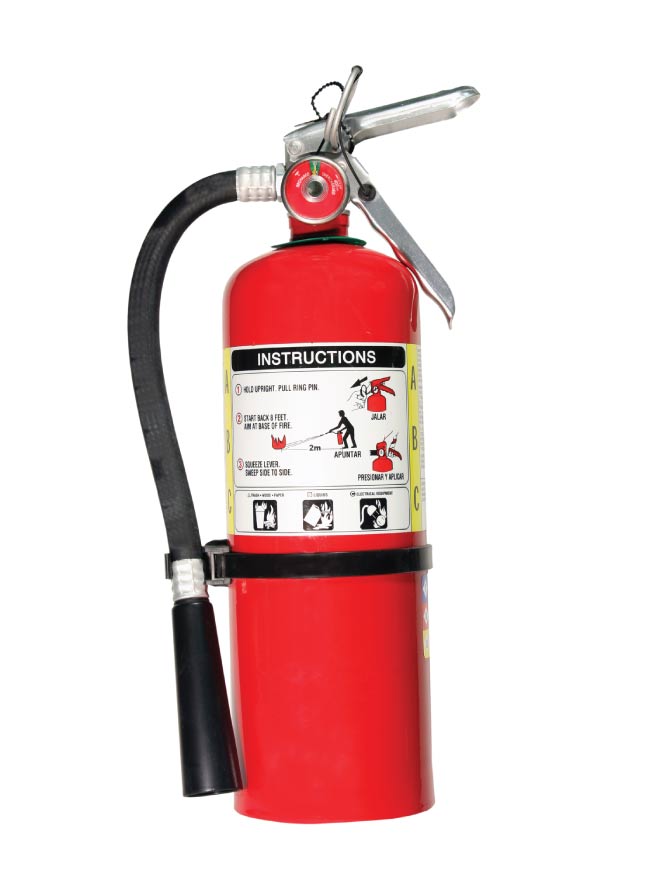
- Every 6 years, most stored-pressure dry chemical extinguishers must be fully discharged, emptied, and internally examined (Title 19, Section 575.4).
- Every 5 or 12 years, depending on the extinguisher type, it must undergo a full hydrostatic test — a pressure test that checks the cylinder itself for corrosion, weak spots, or structural failure risk. CO2 cylinders, for example, are tested every 5 years, while most dry chemical cylinders are on a 12-year cycle.
Miss one of these cycles and the extinguisher is technically out of compliance even if it looks fine on the outside — which is exactly why relying on visual checks alone isn’t enough.
A Quick Reference Table
| Inspection Type | Frequency | Who Performs It |
|---|---|---|
| Visual Inspection | Monthly | Building owner / occupant |
| Annual Maintenance | Every 12 months | Licensed technician |
| Internal Maintenance | Every 6 years (most dry chemical) | Licensed technician |
| Hydrostatic Test | Every 5–12 years (by type) | Licensed technician |

What Happens If You Skip an Inspection?
Beyond the obvious safety risk, an expired or missing tag is one of the fastest ways to fail a fire marshal inspection.
Depending on your city, that can mean a re-inspection fee, a correction notice with a deadline, or in repeat cases, citations. Insurance carriers also routinely request current inspection tags as part of claims and renewals; an extinguisher without a valid tag can complicate a claim even if the extinguisher itself wasn’t involved in the incident.
This is also where bundling helps. If you’re already scheduling fire sprinkler inspections or other life-safety testing, it’s worth having one licensed provider manage your entire fire inspection calendar rather than tracking separate vendors and separate renewal dates for each system.
Does Location Within California Change Anything?
The state-level requirements (Title 19, NFPA 10) apply everywhere in California, but your local Authority Having Jurisdiction — your city or county fire department — can add its own enforcement schedule, documentation requirements, or inspection timing.
That’s part of why working with a provider who already knows your local fire department matters. For example, we handle these details differently for clients in Roseville versus clients in Davis, because the AHJs, typical building stock, and even typical extinguisher classes in use differ from city to city.
Frequently Asked Questions (FAQs)
What is the most common type of fire extinguisher for businesses?
The most common unit is the multipurpose ABC dry chemical fire extinguisher. It handles ordinary combustibles, flammable liquids, and live electrical hazards, making it ideal for general office hallways and retail spaces.
Can you use a Class A fire extinguisher on an electrical fire?
No, you should never use a plain Class A water extinguisher on an electrical fire. Water conducts electricity, which creates a severe risk of electrocution or electrical shock.
What is the difference between Class B and Class K fires?
Class B fires involve general flammable liquids like gasoline or solvents. Class K fires specifically involve high-temperature vegetable oils and animal fats used in commercial cooking equipment, which require saponifying wet chemical agents.
How often do commercial fire extinguishers need to be inspected in California?
California Title 19 requires monthly visual inspections by facility staff and thorough annual inspections performed by a licensed fire protection technician. Internal maintenance and hydrostatic testing are required every 5 or 12 years depending on the unit type.
How do I know which fire extinguisher class I need for my facility?
Your required fire extinguisher classes depend entirely on the hazards present in your building. A professional fire protection audit will assess your facility’s risk zones to ensure full code compliance and optimal safety.
The Bottom Line
Fire extinguisher compliance in California isn’t a single annual task; it’s an ongoing schedule of monthly checks, annual maintenance, and periodic internal and hydrostatic testing. The good news is that once a licensed provider is tracking these dates for you, it stops being something you have to think about.
For the full regulatory text, you can review California Code of Regulations, Title 19, Chapter 3 (Fire Extinguishers) directly through Justia’s regulations database.
Never Miss an Inspection Deadline Again
National Fire Systems handles your monthly reminders, annual maintenance, and hydrostatic testing schedule — so you don’t have to track any of it yourself.